

 Polski
What are the characteristics of screen printing inks?
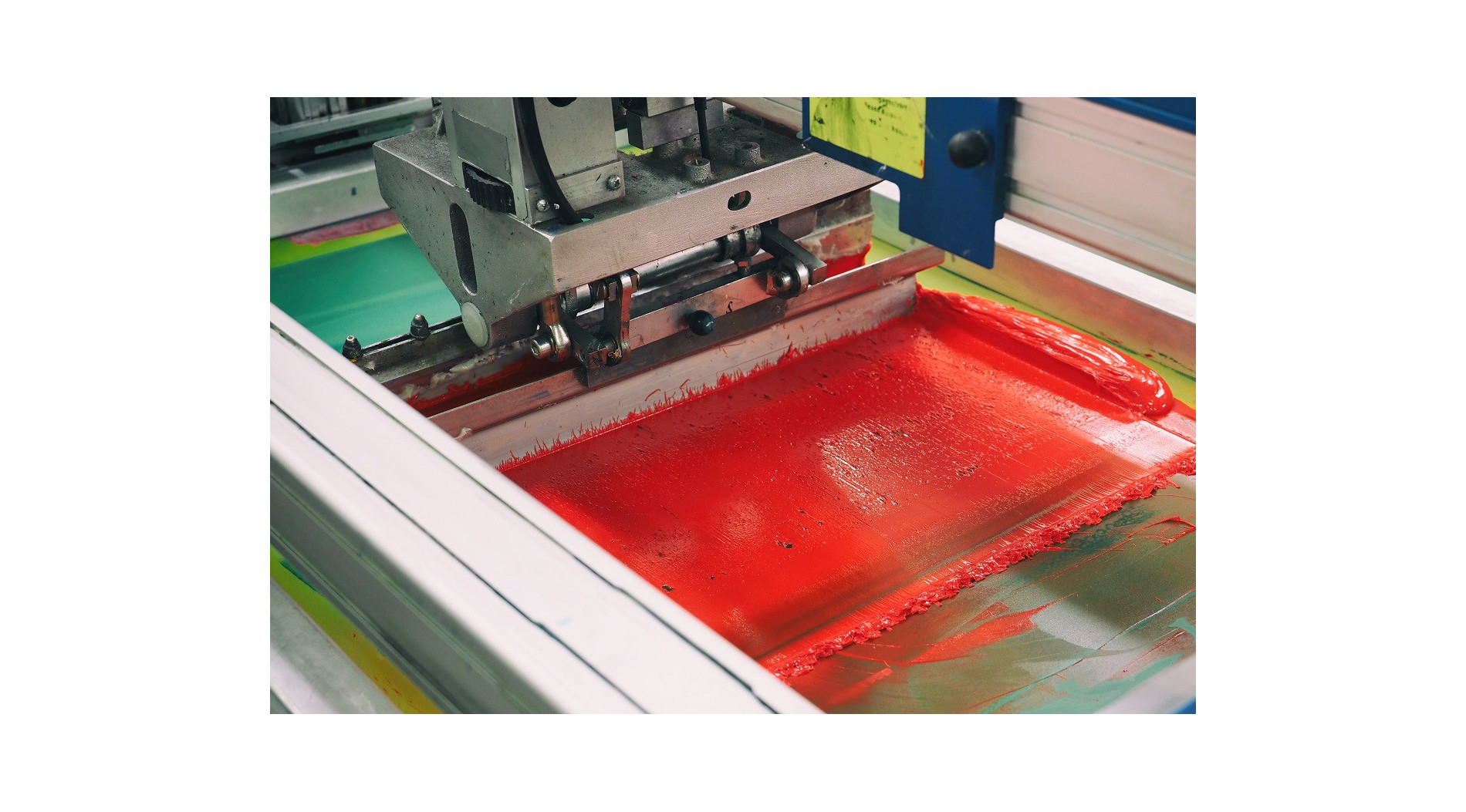
Screen printing is a printing method involving the transfer of ink through a matrix from a screen to the printed surface. It is also a technique often used in the printing of advertising items or gadgets. What inks are used in screen printing?
Characteristics of screen printing inks
Screen printing inks consist of pigments, binders and other additives that give them their unique properties. Pigments provide colour and opacity, while binders and additives provide adhesion, flexibility and durability. Screen printing inks are also available in a range of opacity levels, from transparent to opaque, and can be used to create a variety of designs. However, that is not all. Screen printing inks can have different drying times and other parameters. Most importantly, however, they are manufactured in such a way that they do not fade over time and are resistant to water and various agents. The market also offers special screen printing inks, such as reflective, photochromic, swelling and phosphorescent inks.
Application of screen printing inks
The versatility of screen printing inks is due to the wide range of types available on the market with different properties and strengths. As a result, they can be used to create images on a variety of surfaces. Amongst other things, they are used in the production of logos, signs, labels, works of art such as murals and wall graphics, as well as promotional items such as mugs, caps and T-shirts. However, these are not all examples of the use of screen printing inks. Due to their unique properties and resistance, they can be successfully used in the production of clothing, furniture and other products, each of which will look striking and original.