

 Polski
Characteristics of water-based inks for screen printing
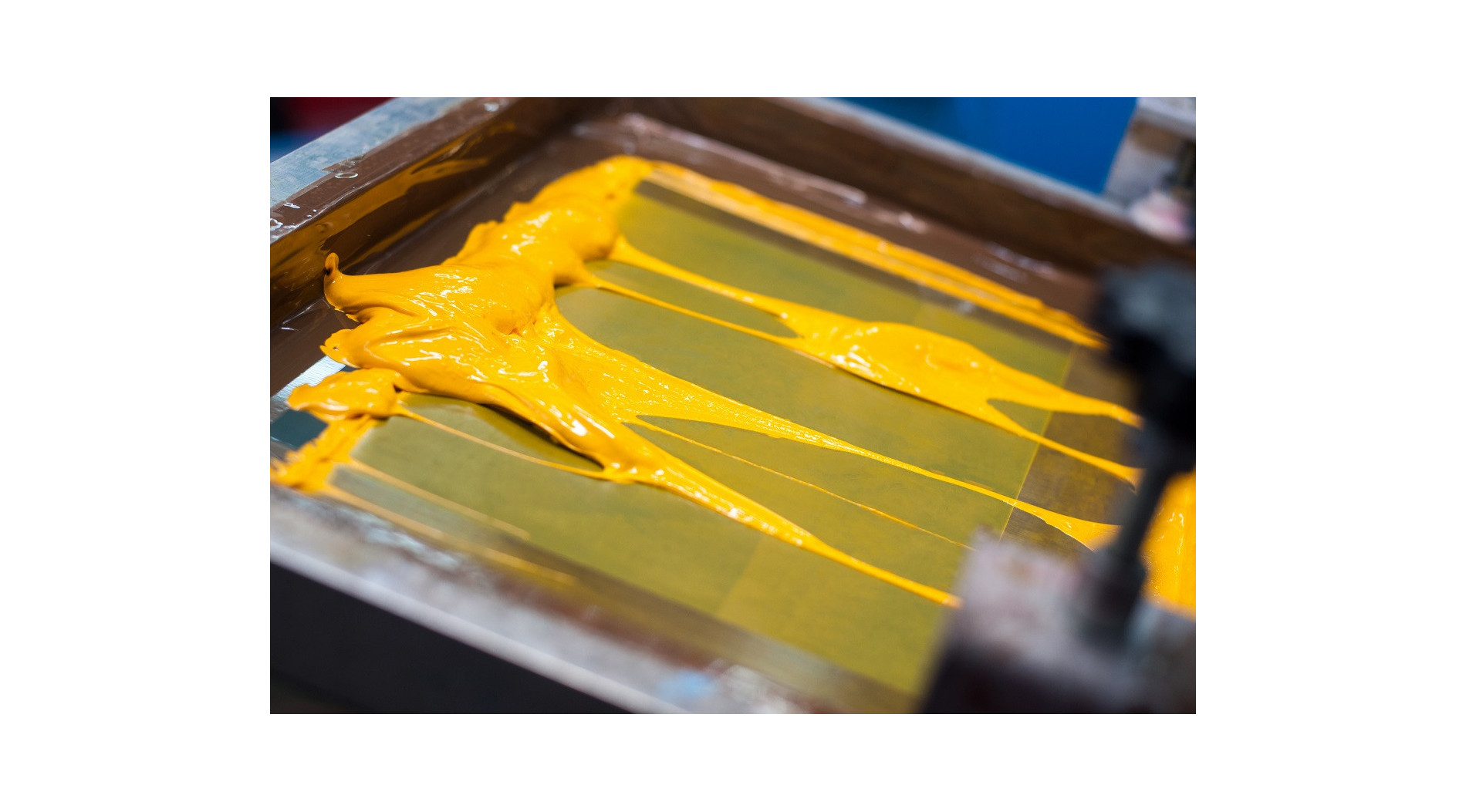
Water-based inks for screen printing are mainly used for printing on clothing. The great advantage of water-based inks is the softness of the print - the resulting decoration is pleasant to the touch, which is extremely important for textiles. Water-based inks are ideal for colouring children's and baby clothes. They are characterised by their intense colour saturation and are available in an extensive colour palette. They are suitable for colouring a variety of materials, both natural and synthetic.
The ink penetrates deeply into the fibre structure and bonds permanently to the fabric. The water-based inks dry at room temperature and the ink residue from the screen can be removed with water, without the need for chemicals. No toxic fumes are released during drying. Water-based paints are free of PVC and the solvent base is water.
Water-based vs. plastisol paints
Today, a significant proportion of plastisol paints no longer contain phthalates - they are created by mixing PVC resin and plasticisers. Compared to plastisol, water-based paints are definitely more environmentally friendly. Water-based inks are biodegradable and do not contain petroleum-based solvents or toxic substances. In addition, water-based inks for screen printing guarantee a longer print life, as they dye the fibres and become an integral part of the fabric. Plastisol, on the other hand, does not dye the fabric, but settles on its surface.
Water-based inks guarantee greater precision and accuracy in prints. Printing with plastisol inks can crack when the fabric is stretched more. Plastisols form an impermeable film on the fabric and have a rubbery texture. Meanwhile, water-based inks are soft and pleasant to the touch and can be washed and ironed without fear of damage.