

 Polski
Characteristics of solvent-based inks for screen printing
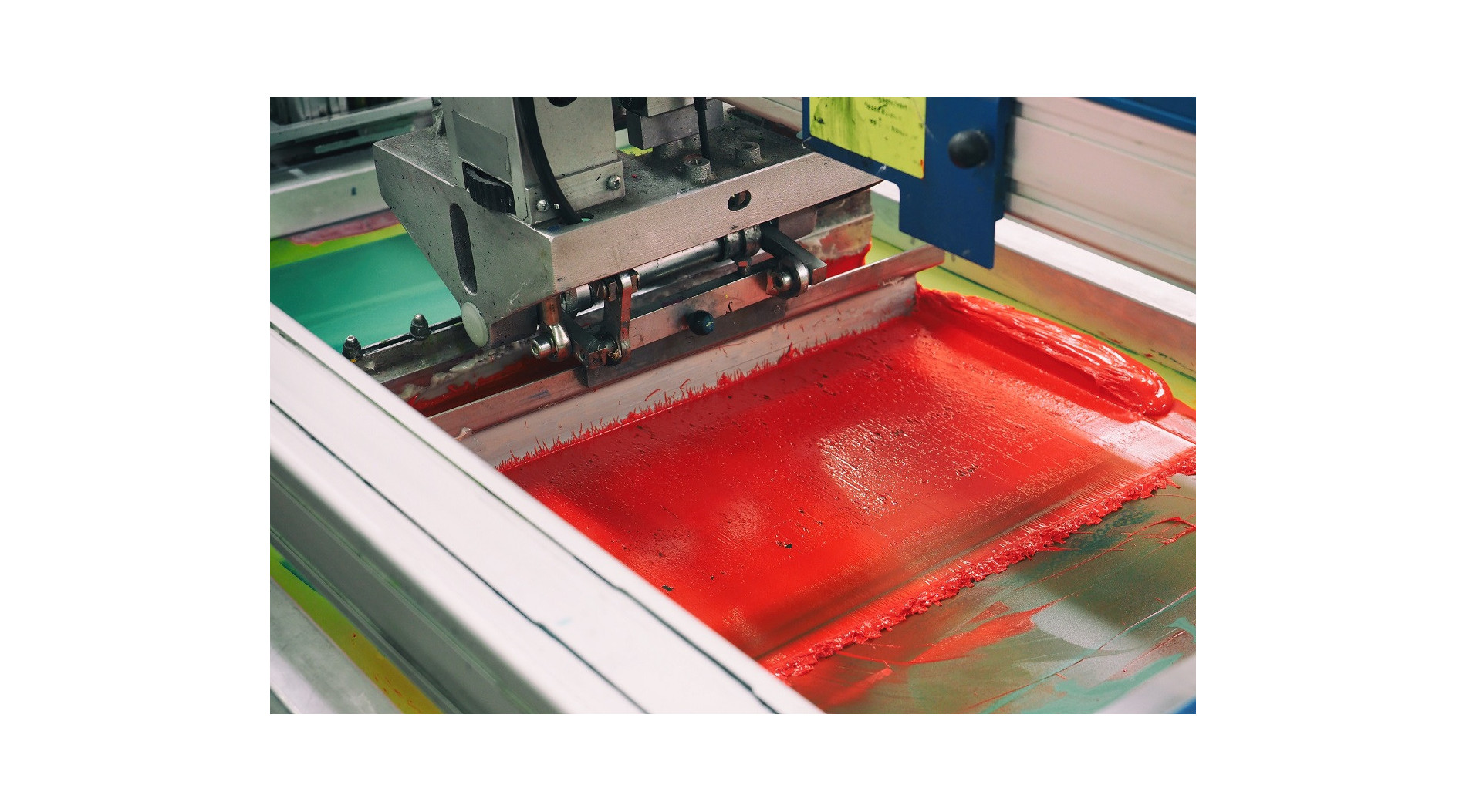
Solvent-based inks consist mainly of pigments, resins and solvents, which allow for permanent and intense colour on a variety of surfaces. These inks are characterised by high adhesion to the substrate, which makes them ideal for printing on plastics, metals, glass or ceramics. What else distinguishes screen printing inks?
Solvent ink screen printing technology
The process of screen printing with solvent inks involves transferring the image from the printing plate to the printed surface using a special mesh coated with a photosensitive emulsion. This mesh is stretched on a frame and placed over the printed substrate. Then, using a squeegee, solvent ink is spread on the surface of the mesh, penetrating the mesh where the image is to be reproduced. Once the printing process is complete, the ink is fixed to the surface of the substrate by means of drying or UV curing. By using solvent inks, it is possible to achieve precise and durable prints on a wide variety of materials.
What are the properties of solvent inks?
Solvent-based screen printing inks are characterised by their high adhesion to a variety of materials, such as plastic, metal, glass or textiles. This makes them suitable for use in a wide range of industries, from advertising and packaging to the production of clothing and gadgets. These paints are also resistant to atmospheric influences such as UV radiation, moisture and temperature changes. In addition, solvent-based inks have the ability to dry quickly, which speeds up the production process and allows high quality prints to be achieved.