

 Polski
Essential chemistry for screen printing
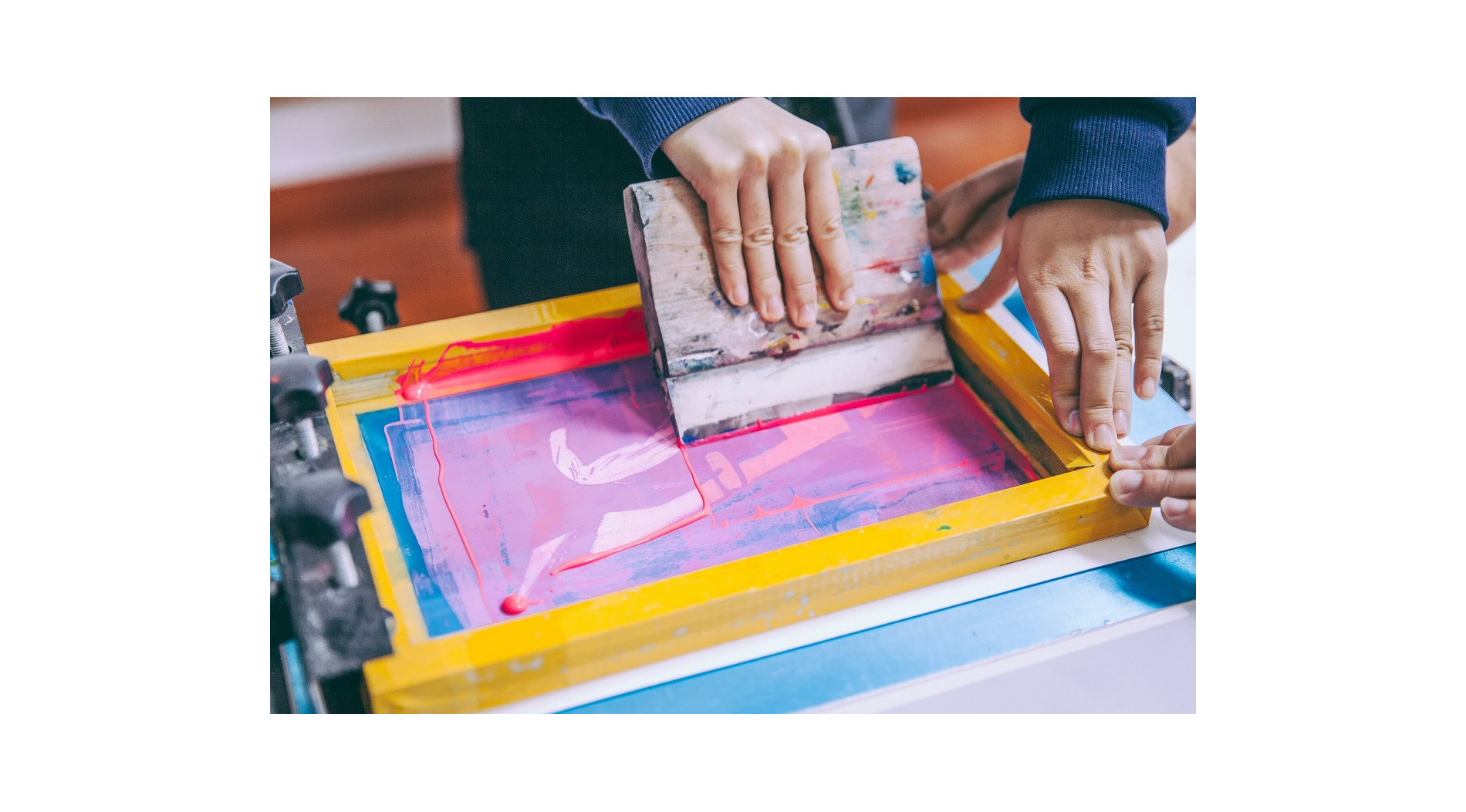
Obtaining good quality prints using screen printing involves the correct preparation of the printing forms, both in terms of the graphic design itself and the correct preparation of the mesh. It will also be necessary to select the right screen printing ink for the substrate (usually water-based, solvent-based, plastisol or ultraviolet-fixed), as well as the correct operation of the machine used. It is worth bearing in mind that, as with other printing technologies, the use of special chemicals for screen printing will also be necessary to achieve the expected results. Let us find out what the specifics of this method are and check what agents will be necessary.
What are the characteristics of screen printing?
Screen printing is a versatile printing technology and is suitable for most absorbent substrates, including paper, cardboard and board, as well as natural fabrics such as cotton or linen and synthetics, and even wood. It will also be indispensable when non-absorbent subst rates such as ceramic, metal and all kinds of plastics from polycarbonate to polyvinyl chloride are involved. There is also a great deal of flexibility when it comes to print size. Screen printing technology will be useful for both small and large areas. There are also no problems with multi-colour printing and printing with special effects due to the availability of a wide range of inks from metallised to extremely flexible, designed for fabrics. Importantly, screen printing will be suitable for almost any print run from single copies to mass production.
What preparations are necessary for screen printing?
The chemicals used in the preparation of the moulds, the printing itself and the cleaning of the machines are many with different characteristics. As far as the preparation of screens for printing is concerned, among the preparations needed will be light-sensitive emulsions enabling the screen to be exposed. It will be difficult to do without adhesives for table tops, frames and screens or agents added to inks, including elasticisers, liquids to reduce stickiness, as well as remover for individual types of inks, catalysts and retouchers for screens. De-laminators will also be useful.